
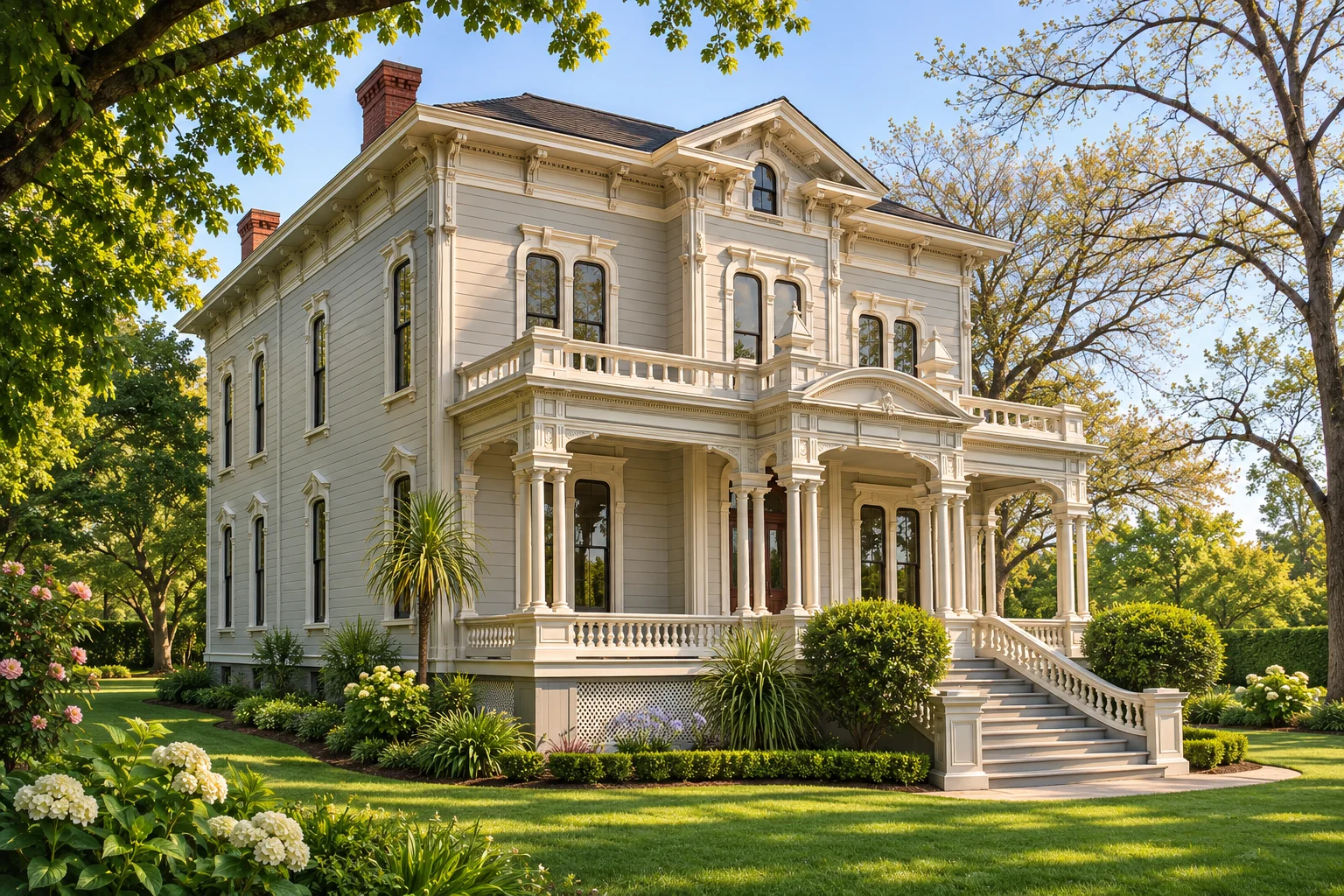
McHenry Mansion invites a closer look at a familiar question in local history. What can one house tell us about the city around it? At 906 15th Street, the answer includes architecture, family life, changing uses, and the work required to keep an older building available to the public. The City of Modesto’s mansion guide dates the home to 1883.
Approach it as a place with several chapters. Its earliest identity was a private residence. Its later history includes other occupants and purposes. The house visitors encounter today reflects both that long life and deliberate efforts to interpret part of it.
A Town House for the McHenry Family
The mansion’s official history identifies Robert and Matilda McHenry as its original owners and Jeremiah Robinson as its architect. Construction began in 1882 and finished in 1883. Robert’s work included ranching and banking, and a home in Modesto allowed him to remain connected with both enterprises.
This relationship between agricultural wealth and town life is a useful starting point. Instead of viewing the house only as an attractive survivor, ask what resources made it possible and what its location offered its owners. A residence can reveal connections between family decisions, business activity, and the development of a city, even when it cannot represent every household within that city.
Reading the Building from the Outside
Look for the Italianate Form
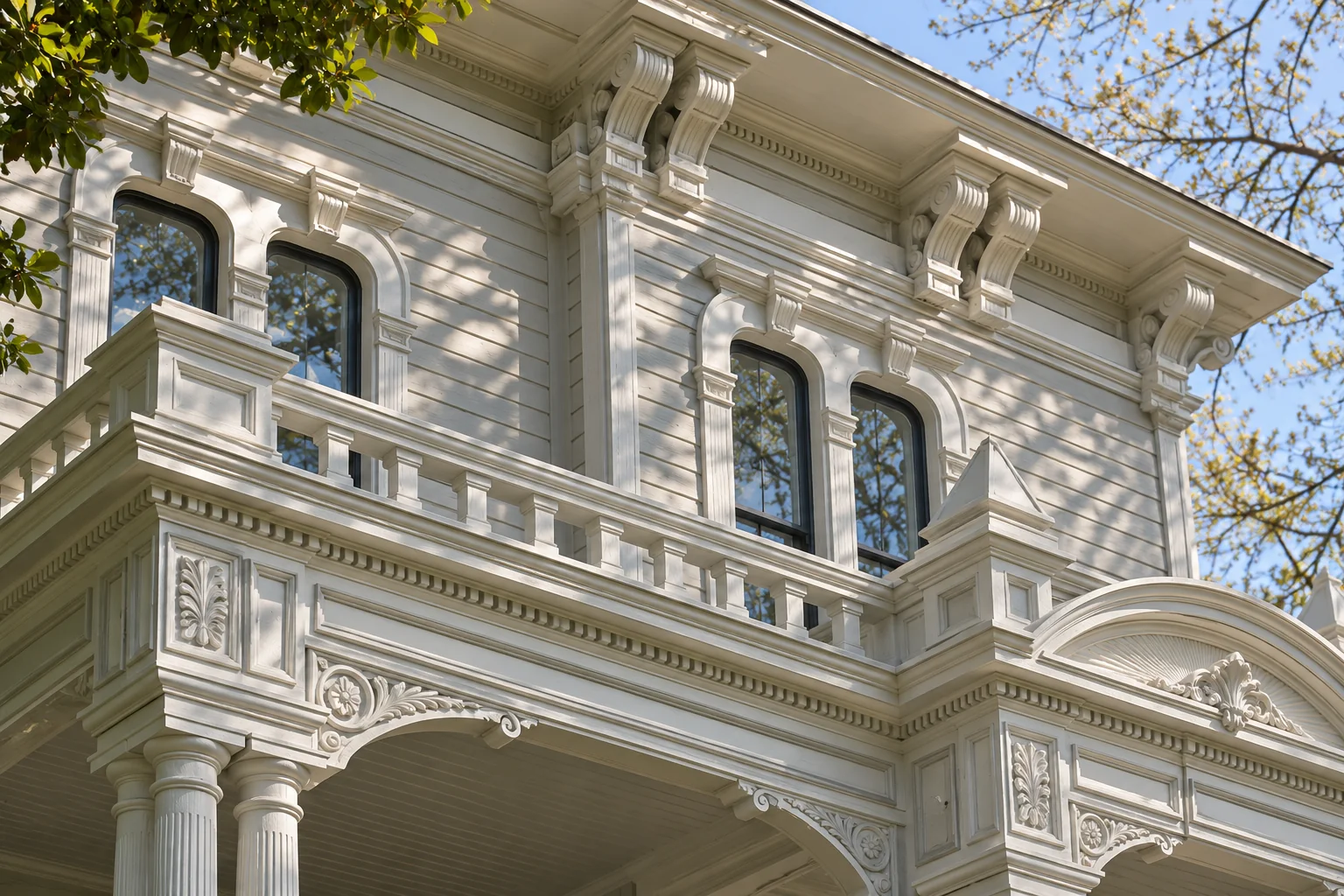
The National Park Service’s register record identifies Italianate architecture among the mansion’s defining characteristics. Its original nomination documentation describes wood-frame construction, projecting bays and porches, a strongly emphasized cornice, and an octagonal cupola.
Those terms become easier to understand when you look upward. The cornice forms the pronounced edge near the roof, while brackets give that edge depth and rhythm. The cupola is the small structure rising above the main roof. Notice how the house balances its broad horizontal roofline with this vertical feature.
Before focusing on decoration, step back and consider the overall proportions. Then compare the entrance, windows, and projecting sections. Looking from the whole building to individual details helps make an unfamiliar architectural style readable without requiring a specialist vocabulary.
What an Interior Tour Can Reveal
Think About How Rooms Were Used
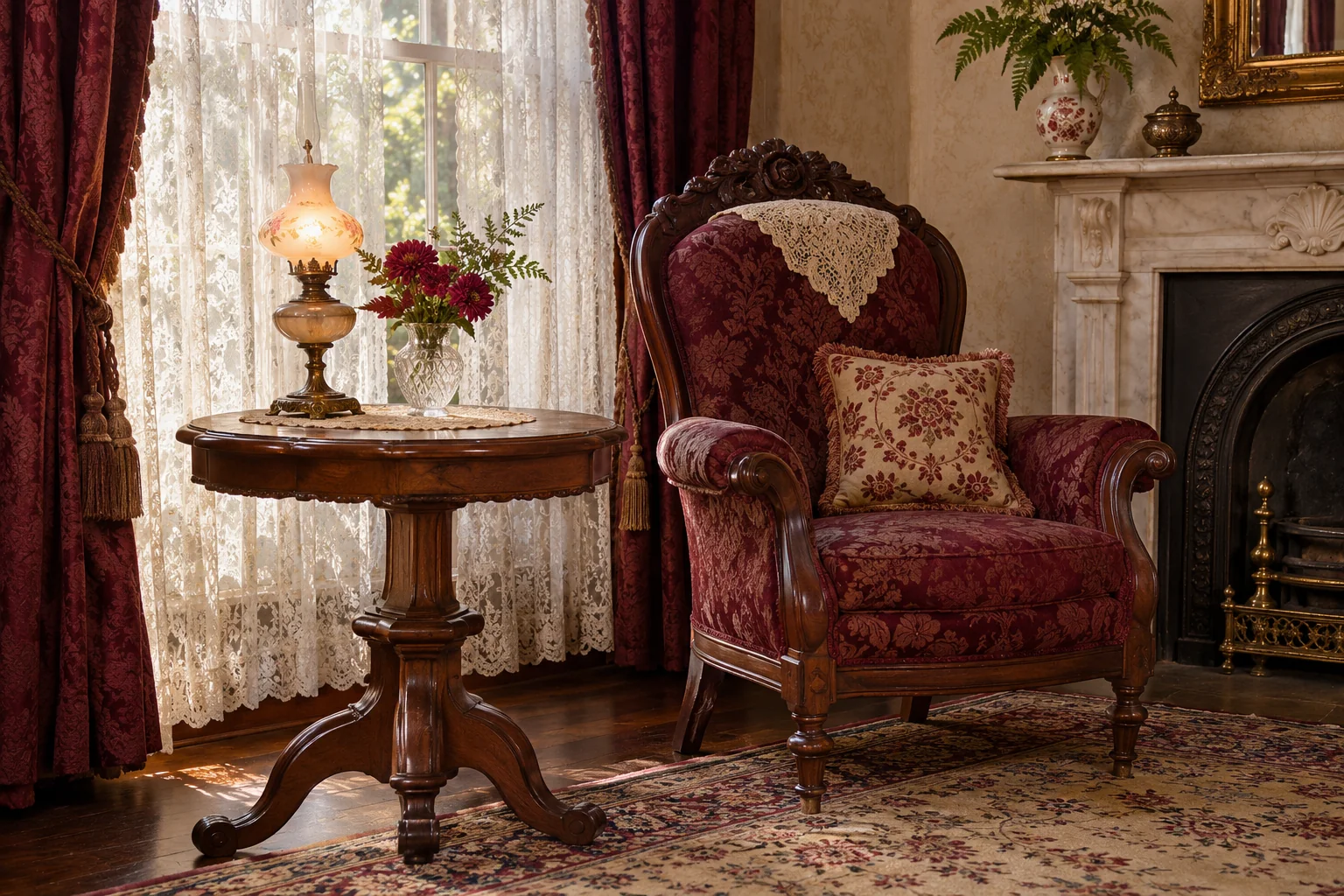
The city describes its historic property tours as an opportunity to explore nineteenth-century architecture, furnishings, and the McHenry family’s history with docents. A guide can connect the physical surroundings with explanations that an exterior photograph cannot provide.
Inside a historic house, useful questions concern movement and activity. Which rooms were intended for receiving visitors? Where did household tasks happen? How did doors, stairs, and adjoining spaces shape daily routines? Let the tour’s evidence answer those questions instead of assuming that a decorative room tells the whole story.
Ask About the Evidence Behind a Display
A particularly useful question is whether an object belonged to the family, dates from the period, or serves another interpretive purpose. These are different kinds of evidence. A furnishing may help explain nineteenth-century life without having occupied that exact room in 1883. Asking the docent makes the visit more informative and avoids turning appearance into an unsupported claim.
The House Changed with Its Occupants
The official mansion history records a conversion to Elmwood Sanitarium in 1919, followed by apartments in 1923. These uses extended the building’s working life beyond its role as a family home. The earlier National Register nomination documents changes associated with apartment use, including alterations to porches and the subdivision of interior space.
That history matters when imagining the mansion’s past. A building does not stop changing when its first owners leave. New occupants may need smaller living spaces, different services, or a different arrangement of entrances. Such changes become part of the building’s record, even when a later restoration emphasizes an earlier appearance.
Preservation Became a New Chapter
According to the official mansion history, Aileen and Julio Gallo arranged its purchase through the Julio R. Gallo Foundation in 1976 and gave it to the city for restoration and community use. Restoration began in 1977, and public access followed in 1983. The California Office of Historic Preservation’s listing records its National Register registration date as April 4, 1978.
The mansion’s history also records a damaging fire in 2011 and completion of another restoration in 2013. Its survival has required repeated care, rather than a single decision to preserve it.
Restoration Involves Choices
The National Park Service’s treatment guidance distinguishes preserving existing historic material from restoring a property to the appearance of a particular period. This is helpful background for understanding any restored house. Documentation, surviving features, and the chosen period all influence how a building is presented.
For a visitor, the practical lesson is to remain interested in both the finished rooms and the decisions behind them. Ask which changes were documented and what evidence guided the work. Restoration history can be as revealing as the story of the people who first lived there.
Pair the Mansion with McHenry Museum
The mansion and museum are separate places with different roles. The McHenry Museum and Historical Society describes the museum at 1402 I Street as a place to explore the broader history of Modesto and Stanislaus County. Its resources also include photographs, local-history publications, and research guidance.
The museum building’s own history also connects it with the family. Oramil McHenry’s estate supported a public library, which opened in 1912. After library service moved to a new building in 1971, the former library became a museum in 1972. Visiting both places introduces two distinct examples of a building finding a new public purpose. One began as a private home; the other was designed to serve readers before becoming a place to interpret community history.
A useful approach is to begin with the house’s specific story, then broaden your questions at the museum. What other kinds of work supported the community? How did other families live? Which experiences are easier to find in photographs or objects than in a grand residence? Moving between those scales produces a fuller understanding of local history.
Plan Your Visit around Current Information
The city lists free guided tours, beginning at the Visitors Center at 924 15th Street. Check the official tour page before leaving, because holiday closures, maintenance, and exhibition work can affect access. Confirm arrangements for your visit instead of relying on an old schedule copied elsewhere.
Continue exploring downtown through the story behind the Modesto Arch, or move into a later chapter with Modesto’s connection to American Graffiti. Each offers another way to read the city, while the mansion provides a particularly tangible starting point.